
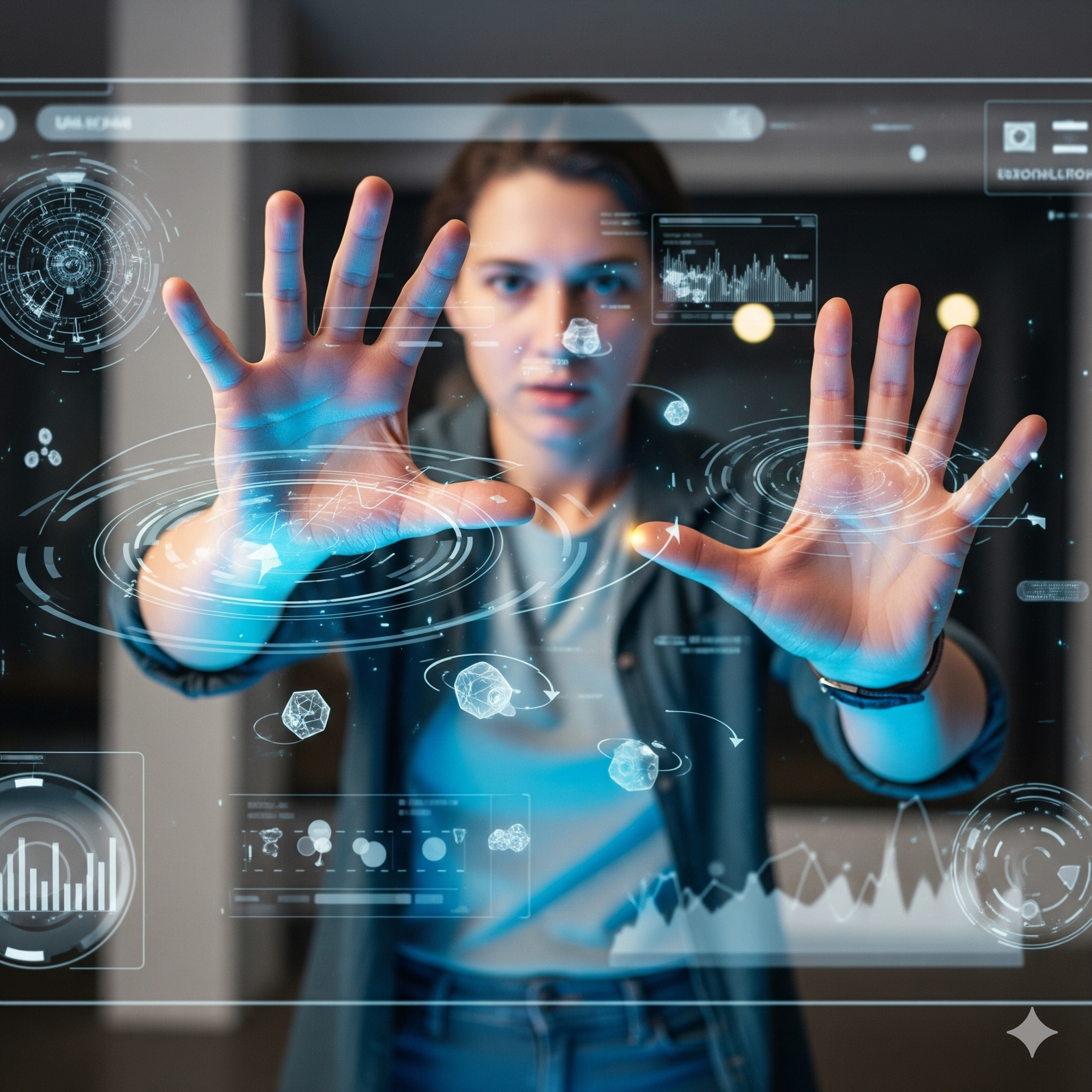
Based on my research, here are some recent and significant developments in Human-Computer Interaction (HCI):
Key Trends and Developments:
- AI-Powered Personalization and NLP: Generative AI is now a cornerstone of modern HCI, enabling systems to analyze vast amounts of data in real-time to deliver personalized and dynamic user experiences. Advanced Natural Language Processing (NLP) allows machines to understand context, emotion, and intent, facilitating more natural conversations through chatbots and virtual assistants.
- Multimodal and Gesture-Based Interfaces: The integration of voice, gesture, and visual inputs is enhancing the richness of user interactions. Gaze gestures are also emerging as a rapidly growing area of HCI research.
- Immersive Experiences with AR/VR: Augmented Reality (AR) and Virtual Reality (VR) are revolutionizing HCI by blending digital content with the physical environment. These technologies are expanding beyond entertainment into education, healthcare, and remote collaboration, offering more engaging and effective user experiences.
- Brain-Computer Interfaces (BCIs): BCIs are a cutting-edge technology that has the potential to revolutionize the way we interact with machines. This technology has the potential to revolutionize the way we interact with computers, allowing people with disabilities to communicate and interact with the world in a more efficient and effective way.
- Wearable Technology: Wearable devices like smartwatches and fitness trackers have already gained significant popularity, and they are likely to become even more prevalent in the future.
- Accessibility and Inclusive Design: Innovations in HCI emphasize designing for diverse user needs, including those with disabilities. Adaptive interfaces, voice control, and AI-powered personalization ensure technology is usable and beneficial for all.
- Internet of Things (IoT) Devices: IoT devices are also becoming increasingly popular, and they are expected to transform the way we interact with technology. These devices can be integrated into various aspects of our daily lives, such as smart homes, smart cities, and smart transportation systems.
Specific Applications and Examples:
- Healthcare: HCI is being used to enhance healthcare delivery and patient outcomes through electronic health records (EHR), robotic surgery systems, telemedicine applications, and wearable devices. VR-based dashboards are also being used to provide doctors with real-time information about patient health status.
- Education: HCI is becoming an integral part of the education industry, enabling effective and engaging learning experiences for students and teachers. Startups are using VR/AR, AI, NLP, and gamification to develop educational modules for e-learning and improve test-taking interfaces.
- Retail: HCI is used to enhance customer experience, increase sales, and optimize commercial operations. Stores are implementing self-checkout kiosks and interactive displays to provide customers with information about products and services.
- Automotive: Assisted or autonomous driving and automobile projection systems are key areas of development.
- Smart Homes: Smart thermostats and other smart home devices are becoming increasingly common.
Future Directions:
- Total Experience (TX): Integrating Customer Experience (CX), Employee Experience (EX), and User Experience (UX) into a unified framework powered by AI to personalize and optimize interactions across all touchpoints.
- Autonomous AI Agents: AI systems that automate routine tasks and collaborate with humans to enhance productivity and decision-making.
- Ethical AI and Privacy: Balancing personalization with user privacy and autonomy remains a critical challenge as AI becomes more embedded in interfaces.
Commentary:
The field of HCI is rapidly evolving, driven by advancements in AI, VR/AR, and other technologies. The focus is shifting towards creating more intuitive, personalized, and immersive experiences for users. Telegesture, as a novel method of interaction, aligns well with this trend, offering the potential for more seamless and natural communication between humans and computers. As technology continues to advance, HCI will play an increasingly important role in shaping how we interact with the digital world, with a growing emphasis on accessibility, inclusivity, and ethical considerations.
Disclaimer: above content was searched, summarized, synthesized and commented by AI, which might make mistakes.
Offered by Creator: Telegesture lets you control your phone or other compatible devices from a distance through hand gestures leveraging advanced computer vision and machine learning techniques analyzing the device’s camera data in real time. It feels especially awesome when you project your device screen to a TV or projector, as if you are controlling the TV or projector from afar through Telekinesis power!

Leave a Reply