
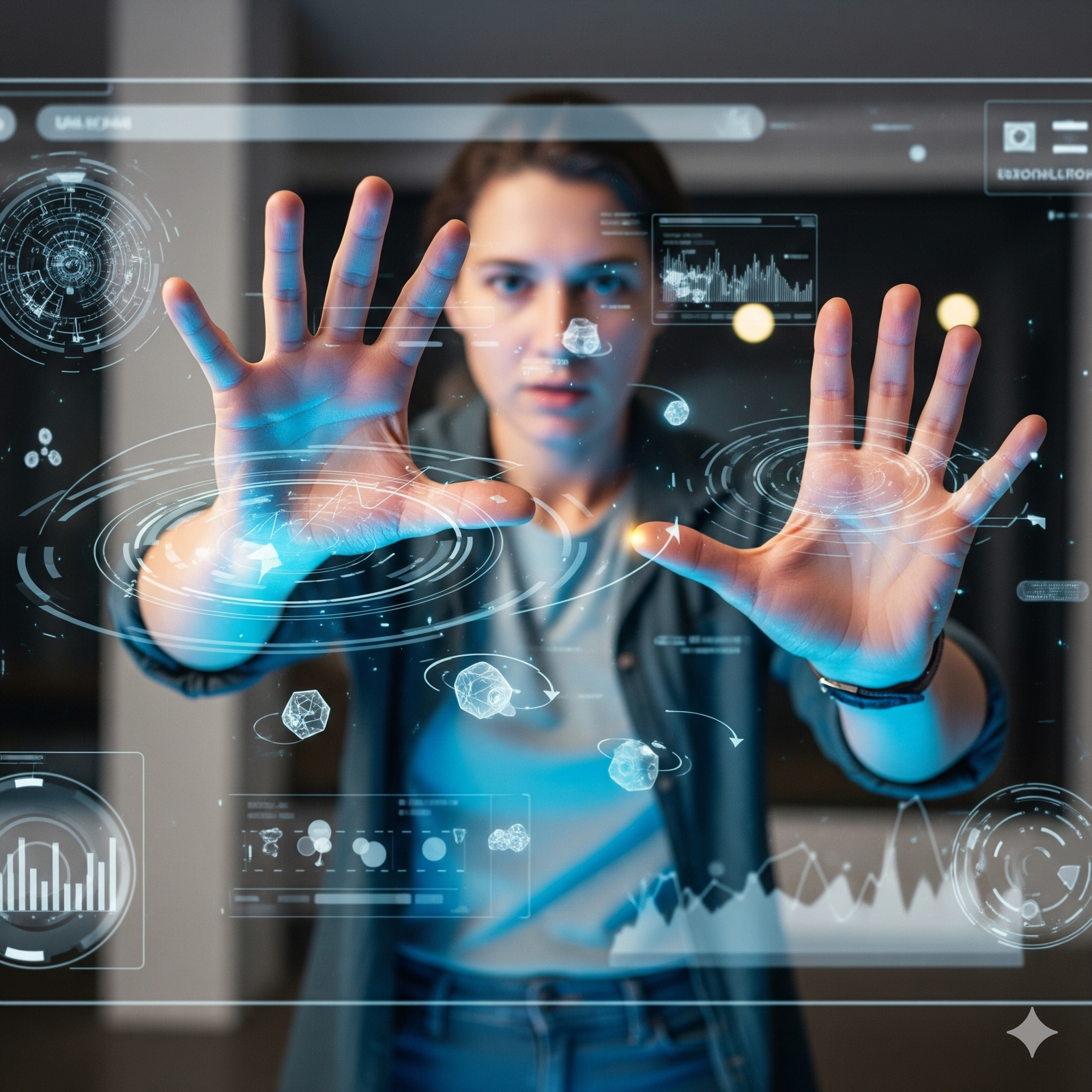
Based on my research, here are some recent and significant developments in gesture control for smart home ecosystems:
Research and Development:
- Gesture Recognition Accuracy: Research is ongoing to improve the accuracy of gesture recognition systems using machine learning algorithms. Systems are being developed to interpret hand gestures and translate them into commands for controlling home appliances.
- Touchless Control: Contactless switches using gesture control are being developed to control household appliances, enhancing convenience and sanitation. These systems use infrared, ultrasonic, or camera-based sensors to read and analyze user gestures in real-time without direct contact.
- Frameworks: Frameworks like Mediapipe are used for hand tracking and gesture recognition in smart home applications.
- Assistive Technology: Gesture control systems are being developed to assist individuals with speech disabilities and the elderly in controlling smart home appliances. These systems aim to provide an alternative to voice control, offering a more intuitive and accessible interface.
- IoT Integration: Studies focus on integrating gesture recognition modules into IoT-enabled smart home systems, allowing users to control appliances comfortably.
- Energy Efficiency: Gesture recognition systems have the potential to improve energy efficiency by responding to gestures indicating a user’s presence or absence and adjusting lighting and surveillance systems accordingly.
- System Design: Research involves designing gesture-based control systems using sensors and control panel systems, where sensors detect control gestures and send signals to smart devices.
- Multimodal Interaction: Gesture recognition is being combined with other modalities like voice control to enhance the user experience in smart home environments.
Products and Implementations:
- Smart Home Hubs: Devices like DiCE SMART offer control over smart home solutions via smartphone apps, hand gestures, and voice commands.
- Gesture-Controlled Switches: Contactless switches that use hand gestures to control appliances are emerging as energy-efficient alternatives to traditional switches.
- Smart TV Integration: Samsung and LG have launched smart TVs with AI-powered gesture recognition and 3D image sensors for seamless smart home control and enhanced gaming experiences.
- DIY Projects: Projects using Raspberry Pi and other microcontrollers are being developed to create wireless gesture controllers for lights and other appliances.
- Commercial Products:
- FIBARO Swipe is a device that recognizes gestures to control smart home devices.
- Google Nest Hub (2nd gen) has quick gesture support using Google’s Soli technology.
Trends:
- Intuitive Control: There is a trend toward adding a level of intuition to the user experience, providing enhanced ease for users looking to control their home systems with ease.
- Gesture-Based Home Automation: The use of hand gestures and voice commands to control smart homes is disrupting the traditional remote control.
- Accessibility: Gesture recognition technology is being developed to enhance accessibility for people with disabilities, offering a more intuitive and contactless interface.
- Customization: Some systems allow users to program custom gestures for specific actions, providing a personalized smart home experience.
Challenges:
- Reliability: Ensuring the reliability of gesture detection systems under various lighting conditions remains a key challenge.
- Cost: High implementation costs of advanced gesture recognition systems can limit adoption in price-sensitive regions.
- Response Time: Some gesture recognition applications may experience relatively long response times.
Commentary:
Gesture control in smart home ecosystems is evolving rapidly, driven by advancements in AI, sensor technology, and wireless communication. While voice control has been a dominant mode of interaction, gesture control offers a more intuitive and accessible alternative, particularly for users with disabilities or in situations where voice commands are impractical. The integration of gesture recognition into smart TVs, home hubs, and DIY projects indicates a growing interest in this technology.
However, challenges such as reliability, cost, and response time need to be addressed to achieve widespread adoption. Future developments are likely to focus on improving the accuracy and robustness of gesture recognition algorithms, reducing implementation costs, and enhancing the user experience through multimodal interaction and customization options. As the technology matures, gesture control has the potential to become a mainstream feature in smart homes, offering a more seamless and personalized way to interact with connected devices.
Disclaimer: above content was searched, summarized, synthesized and commented by AI, which might make mistakes.
Offered by Creator: Telegesture lets you control your phone or other compatible devices from a distance through hand gestures leveraging advanced computer vision and machine learning techniques analyzing the device’s camera data in real time. It feels especially awesome when you project your device screen to a TV or projector, as if you are controlling the TV or projector from afar through Telekinesis power!

Leave a Reply