
Knowledge Representation and Reasoning (KRR) is a core area of AI focused on enabling machines to understand and utilize knowledge to make intelligent decisions. It deals with formalizing knowledge and developing reasoning algorithms to infer new knowledge.
Recent Developments and Trends:
- Integration of Machine Learning: A significant trend involves combining KRR with machine learning techniques to enhance reasoning abilities, tackle complex problems, and improve learning and adaptation. This includes using machine learning for pattern recognition and prediction to enhance reasoning.
- Explainable AI (XAI): Research focuses on making KRR-based decisions more transparent and understandable.
- Knowledge Graphs: Knowledge graphs are being used for enhanced reasoning and to transform data into actionable knowledge for enterprise applications.
- Nuanced Reasoning Forms: KRR is evolving to include more human-like reasoning processes beyond traditional logical reasoning.
- Dynamic Learning Representations: Developing knowledge representations that can adapt to changing knowledge requirements is an ongoing area of development.
- Hybrid Models: Enhanced integration of symbolic reasoning and neural network-based learning in hybrid models.
Applications:
- Cognitive Robotics: KRR is used in robotics to interpret sensory data and make autonomous decisions in complex environments.
- Medical Diagnosis: Expert systems use KRR for diagnosing diseases.
- Conversational AI: KRR is applied in developing conversational bots with more human-like reasoning.
- IoT Integration: KRR is used to represent and reason about data from IoT devices for intelligent decision-making in areas like resource management.
- Knowledge Management: AI solutions leverage knowledge graphs and semantic search for knowledge management within organizations.
Challenges:
- Scalability: Addressing scalability issues in handling large amounts of knowledge remains a challenge.
- Uncertainty: Handling uncertainty and incomplete information in real-world environments is an ongoing challenge.
- Ethical Considerations: Addressing ethical considerations in the development and deployment of KRR systems.
- Dynamic Environments: Adapting to the dynamic nature of real-world environments.
Commentary:
The field of Knowledge Representation and Reasoning is experiencing a resurgence, driven by the need for AI systems that can not only process data but also understand and reason about it. The integration of machine learning techniques is particularly promising, as it allows KRR systems to leverage the strengths of both symbolic and sub-symbolic AI. As KRR continues to evolve, it is likely to play an increasingly important role in a wide range of applications, from robotics and healthcare to knowledge management and decision support. However, it is important to address the challenges related to scalability, uncertainty, and ethics to ensure that KRR systems are robust, reliable, and aligned with human values.
Disclaimer: above content was searched, summarized, synthesized and commented by AI, which might make mistakes.
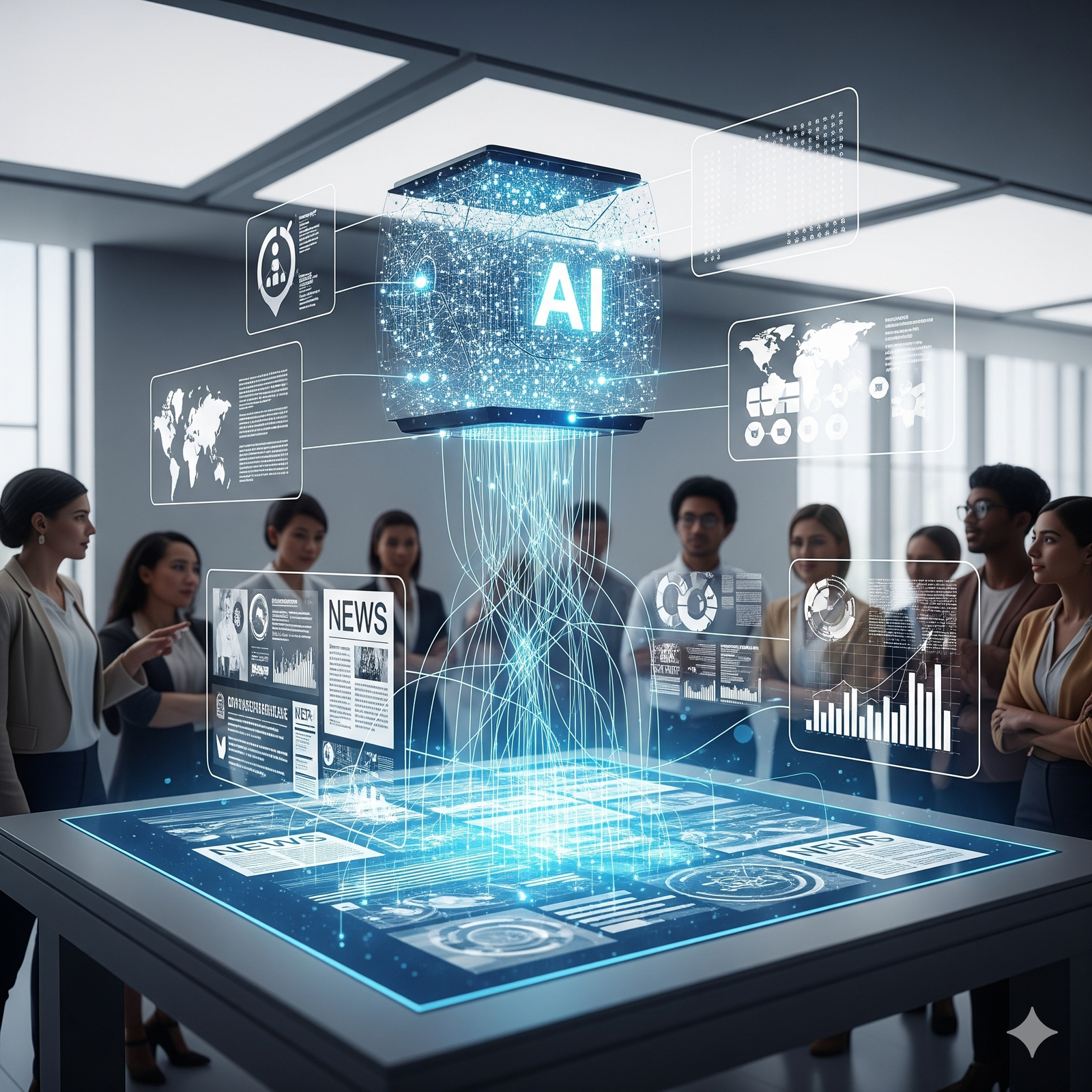
Offered by Creator: AI(s) like Gemini and ChatGPT is fundamentally shifting our ways of accessing information. To get informed and understand what’s happening in the world, we may not need to search and browse various websites and news portals anymore. Instead, imagine an AI that searches, summaries, synthesizes and comments the important things happening out there for us to easily consume at our finger tips, saving us from laborious clicking and scrolling. That’s exactly what My Gists does for you built with the latest Agentic AI technologies.

Leave a Reply