
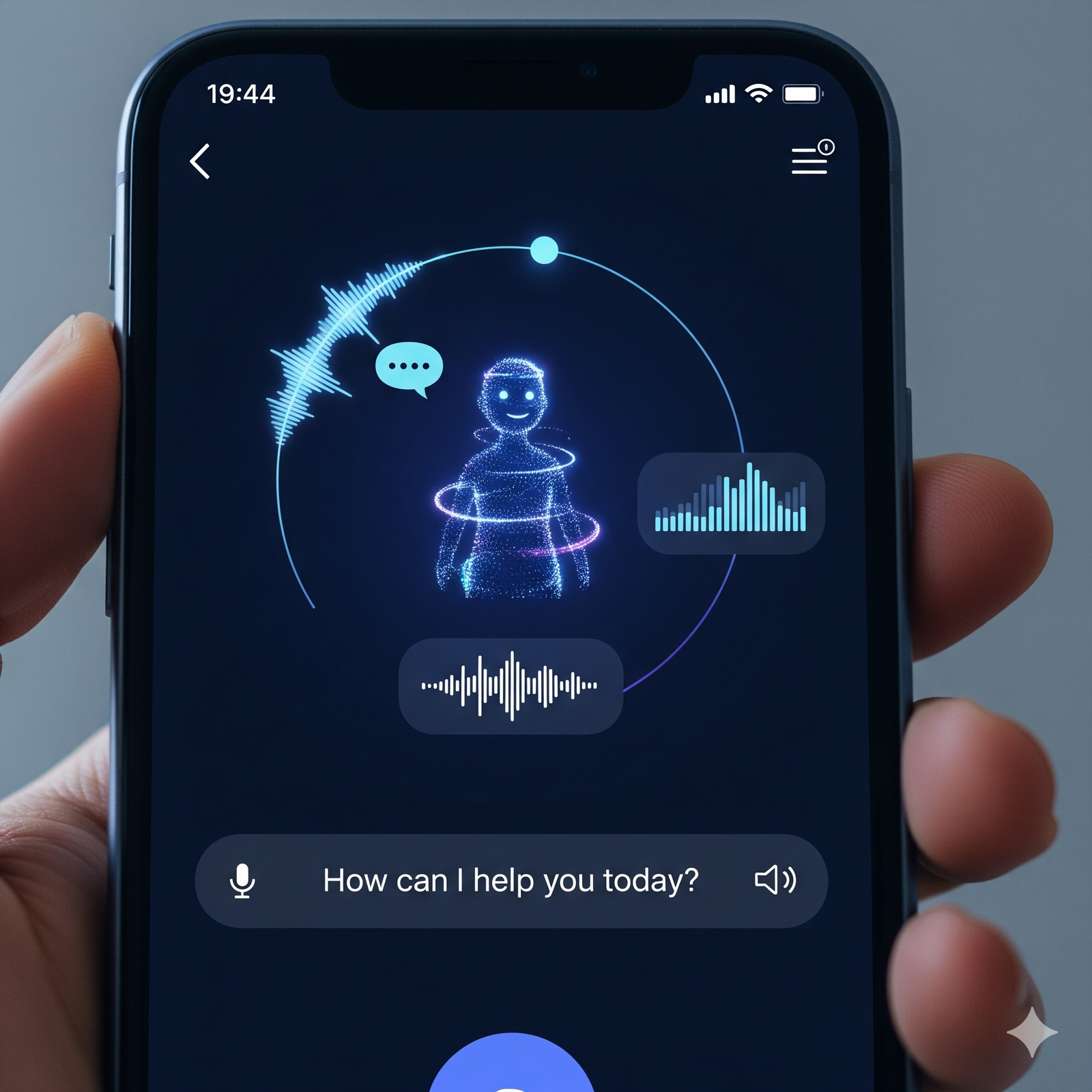
Based on my research, here are some recent developments regarding the integration of AI in mobile devices:
Key Trends and Developments:
- On-Device AI Processing: A major trend is the shift towards on-device AI processing, where AI tasks are performed directly on the mobile device rather than relying on cloud servers. This offers several advantages, including enhanced privacy, faster response times, and offline functionality.
- Generative AI Integration: Generative AI is being integrated into smartphones to enhance various features such as communication, image editing, personalization, and accessibility.
- AI-Powered Mobile Apps: An increasing number of mobile apps are leveraging AI to enhance user experience. Examples include Google Assistant for voice interaction, AI-driven content recommendations in streaming apps like Netflix and Spotify, and e-commerce apps using ML to predict products users are likely to buy.
- Advanced Chipsets: Next-generation AI smartphones are powered by advanced chipsets like the Snapdragon 8 Gen 4, MediaTek’s Dimensity 9300, and Qualcomm’s Snapdragon 8 Gen 3, which improve performance and enable more AI to operate directly on devices.
- AI Agent Phones: A new category of “AI agent phones” is emerging, integrating powerful AI chips directly into the hardware for real-time data analysis and task completion without network dependency.
- Model Optimization Techniques: Companies like Samsung are focusing on model compression techniques such as low-bit quantization and weight/activation sparsity to enable efficient on-device AI processing.
- New AI Models: Companies are releasing new AI models designed to run on devices. Apple recently unveiled FastVLM and MobileCLIP2, two new AI models designed to operate without cloud dependency, promising to enhance real-time processing for tasks like video captioning and object identification directly on smartphones.
- AI in Mobile Hardware: AI is revolutionizing mobile hardware by enabling powerful processors that enhance a smartphone’s speed and efficiency.
Specific Examples of AI Integration:
- Google’s Android: Google is integrating generative AI directly into Android to enhance everyday mobile tasks, aiming to create a seamless experience where AI acts as an invisible assistant.
- Samsung Galaxy AI: Samsung’s Galaxy AI allows users to rephrase sentences in different styles and moods, while also providing spelling and grammar corrections. Their smartphones also incorporate an Object Eraser function to remove objects from photos.
- Live Translation: Smartphones like the Samsung Galaxy S24 and ASUS Zenfone 11 Ultra utilize on-device AI for real-time translation of phone calls.
- Motorola Edge 60 Neo: Features moto ai, Motorola’s on-device AI suite that enhances photography, productivity, and everyday usability.
- Lenovo: Introduced new AI-powered tablets with on-device hybrid AI features, such as the Yoga Tab and Idea Tab Plus.
- Improved Search: Google unveiled “Circle to Search” for Android phones, a feature enabling users to search from anywhere on their device using gestures.
- Virtual Assistance: OnePlus introduced an AI Summarizer for concise phone call recaps. Android Auto AI quickly summarizes messages, documents, and web content. Samsung’s Chat Assist and Google’s Magic Compose can adjust message tones before sending.
Challenges and Considerations:
- Data Privacy and Security: Handling sensitive user data requires strict compliance with regulations.
- High Development Costs: AI models can be expensive to develop and maintain.
- Model Accuracy: Poorly trained AI models can produce inaccurate results.
- Device Limitations: On-device AI may be constrained by processing power, memory, and battery life.
- Potential for increased electronic waste: AI integration into smartphones may lead to a faster turnover of smartphones, as consumers seek to keep up with the latest technology.
- Over-reliance on devices: As smartphones become smarter, users might find themselves overly reliant on these devices for everyday tasks.
Commentary:
The integration of AI into mobile devices is rapidly transforming the way we interact with technology. The shift towards on-device AI processing is particularly significant, as it addresses concerns around privacy and latency, while also enabling offline functionality. The increasing power of mobile chipsets and the development of efficient AI models are making it possible to run complex AI tasks directly on devices, opening up new possibilities for personalized and intelligent mobile experiences.
While challenges remain in terms of data privacy, development costs, and device limitations, the benefits of AI-powered mobile devices are becoming increasingly clear. As AI technology continues to advance, we can expect to see even more innovative and transformative applications of AI in mobile devices, further enhancing our daily lives. It’s also important to consider the ethical implications and potential societal impacts of AI in mobile devices, such as increased electronic waste and over-reliance on technology, to ensure that these advancements are used responsibly and for the benefit of all.
Disclaimer: above content was searched, summarized, synthesized and commented by AI, which might make mistakes.
Offered by Creator: SpeakLens is a revolutionary mobile application developed to provide users with an intuitive and immersive AI companion experience. By seamlessly integrating advanced audio and visual processing with a state-of-the-art AI model, SpeakLens enables natural conversations and real-time understanding of the user’s surroundings.

Leave a Reply