
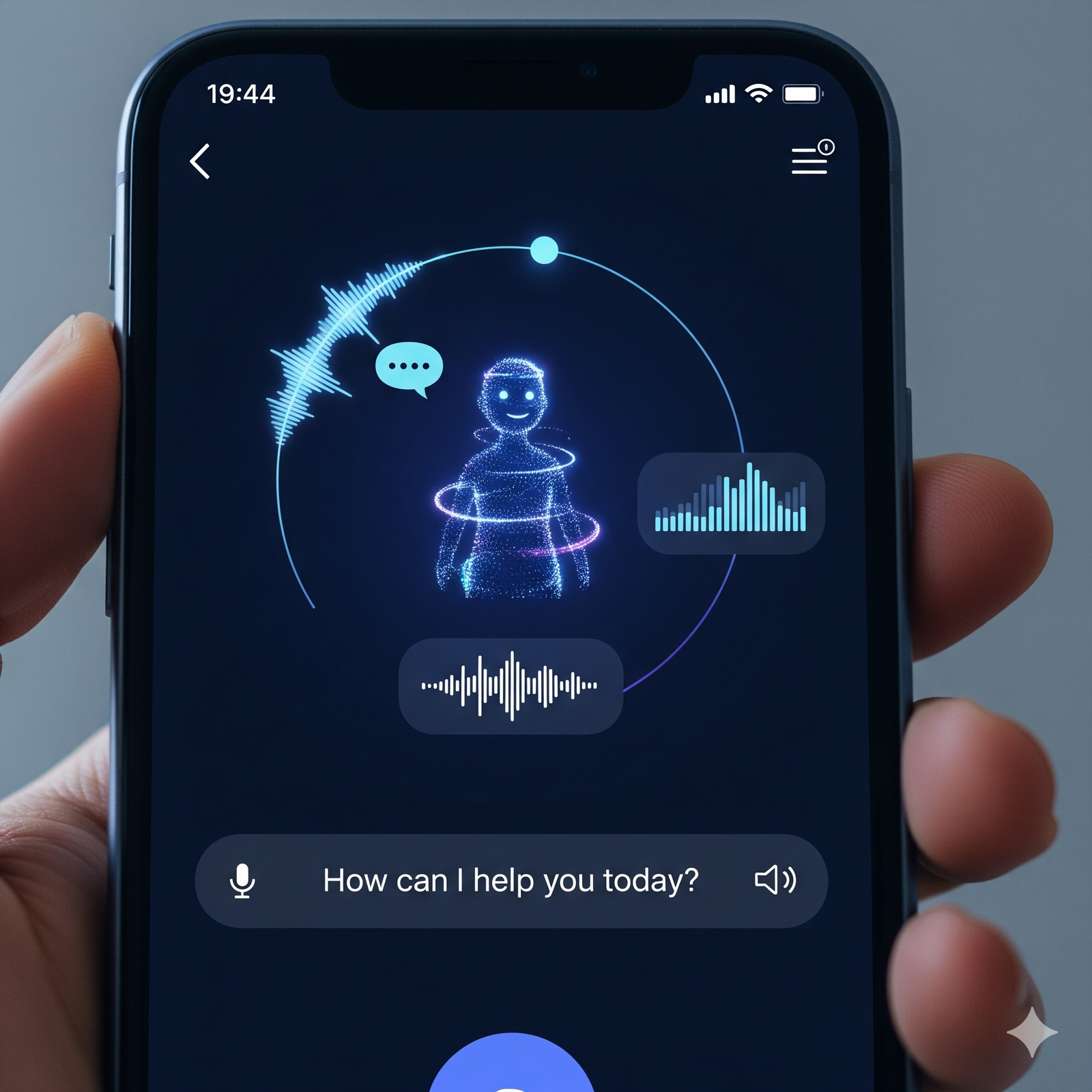
Natural Language Processing (NLP) is rapidly evolving, with significant advancements across various applications. Here’s a summary of recent developments and trends:
Key Trends and Advancements:
- Rise of Deep Learning and Transformer Models: Deep learning, especially transformer models like GPT-4, BERT, and T5, have greatly enhanced NLP tasks, including text generation, language translation, and sentiment analysis. These models allow machines to process and understand language with greater accuracy.
- Multilingual NLP: NLP models are becoming increasingly capable of handling multiple languages. Models like XLM-RoBERTa can process text across different languages without retraining for each one, improving global access to AI tools.
- Real-time Language Translation: Real-time speech translation is becoming more accurate, breaking down communication barriers in multilingual interactions, which is particularly useful for businesses operating in multiple regions.
- Few-Shot and Zero-Shot Learning: NLP models are increasingly able to learn from limited data. GPT-4 has demonstrated significant few-shot learning capabilities, generating accurate results from just a few examples.
- Efficient Transformer Models: Researchers are focused on improving the efficiency of transformer models to reduce computational costs. Techniques like sparse transformers and Reformer are designed to handle longer input sequences efficiently.
- Ethical NLP: Addressing bias and fairness in NLP models is an increasing concern.
- Enhanced Language Understanding: NLP models now parse sentence meaning, including metaphor, sarcasm, and intent, with greater accuracy.
- Emotion Detection: NLP systems can analyze words to detect emotional tone, making interactions with chatbots and virtual agents more empathetic.
- AI Marketplaces: AI marketplaces are emerging, offering pre-built AI models for NLP tasks like sentiment analysis and language translation.
- NLP-Powered Content Creation: NLP systems can generate news articles on data-driven topics and optimize content for search engines in real-time.
Applications:
- Healthcare: NLP is revolutionizing medical data interpretation.
- Customer Service: NLP is enhancing customer support through smarter systems.
- Finance and Marketing: NLP is transforming these sectors.
- Conversational AI and Virtual Assistants: Virtual assistants are becoming more sophisticated, engaging in context-aware conversations.
- Accessibility: NLP is enhancing accessibility for the visually or speech-impaired through more responsive and natural screen readers and voice interfaces.
- Integration with AR/VR: NLP enables natural conversation with AI avatars and virtual agents in immersive environments.
Commentary:
NLP is clearly advancing at a rapid pace, driven by developments in deep learning and transformer models. These advancements are not only improving the accuracy and efficiency of NLP systems but also expanding their applicability across diverse industries. The focus on multilingual capabilities and ethical considerations is particularly important, as it aims to make NLP more inclusive and responsible. As NLP becomes more integrated into daily life, addressing issues of privacy, data security, and ethical AI use will be crucial. The emergence of AI marketplaces and the development of custom AI assistants for businesses also signal a trend toward greater accessibility and customization of NLP technologies.
Disclaimer: above content was searched, summarized, synthesized and commented by AI, which might make mistakes.
Offered by Creator: SpeakLens is a revolutionary mobile application developed to provide users with an intuitive and immersive AI companion experience. By seamlessly integrating advanced audio and visual processing with a state-of-the-art AI model, SpeakLens enables natural conversations and real-time understanding of the user’s surroundings.

Leave a Reply