
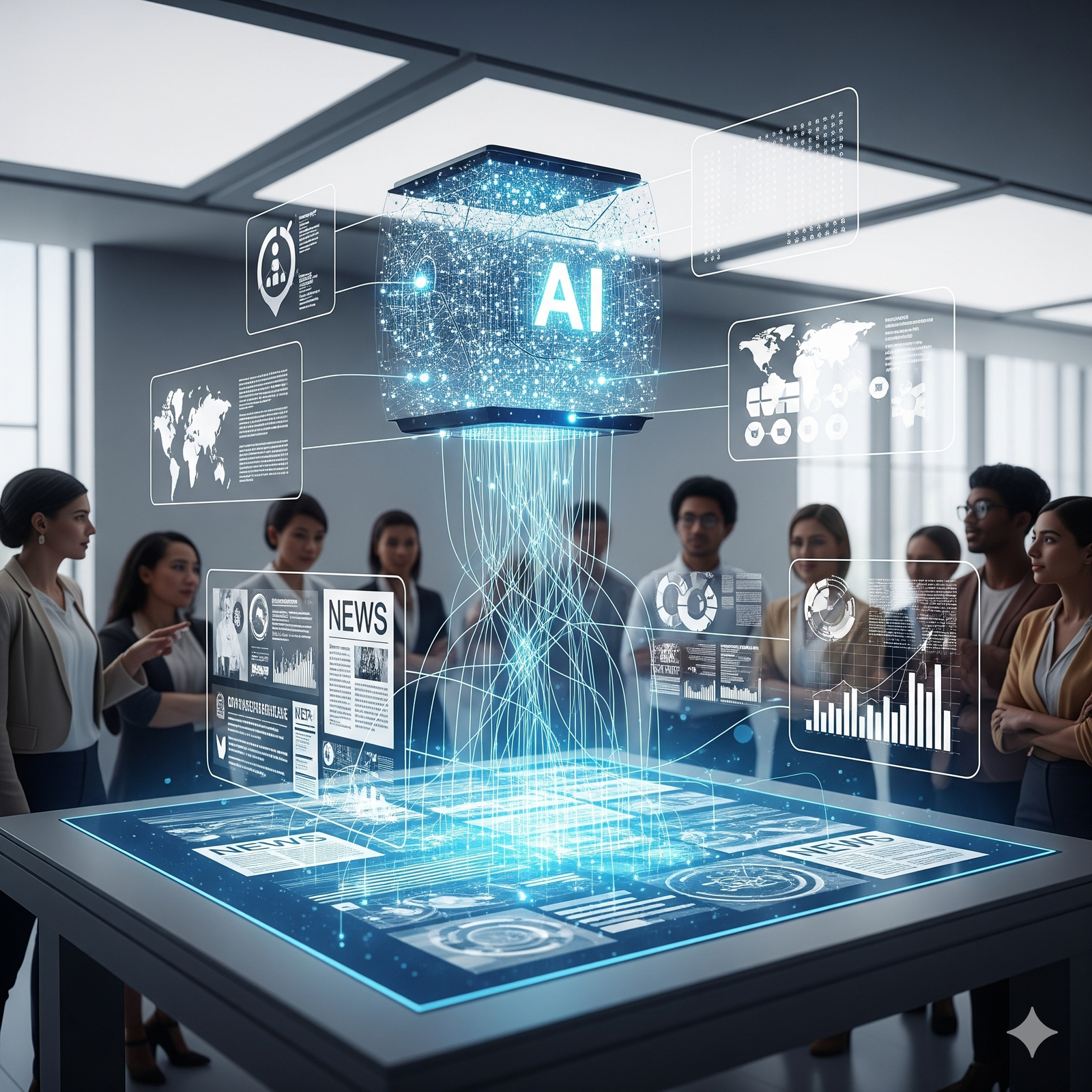
Agentic AI is rapidly evolving, marked by advancements in autonomous systems capable of making decisions and performing tasks with minimal human intervention. These systems leverage technologies like reinforcement learning and large language models to adapt and improve over time. Recent developments emphasize enhanced planning capabilities, reasoning abilities, and robustness in complex scenarios.
Key Developments and Trends:
- Enhanced Reasoning and Planning: Recent breakthroughs in large language models (LLMs) have significantly enhanced the reasoning capabilities of Agentic AI. This allows AI agents to pursue goals, make decisions, and execute tasks autonomously.
- Multi-Agent Systems: There’s a growing trend towards using teams of smaller, specialized agents instead of one giant model to handle complex tasks. One agent acts as a “planner” and orchestrates the actions of multiple agents.
- Integration and APIs: Seamless integration of AI agents into complex enterprise systems is facilitated by the increasing availability of APIs.
- Real-world Applications: Agentic AI solutions are being deployed across various AI use cases in real-world ecosystems. Examples include:
- Customer Service: Proactively identifying and resolving customer issues, offering solutions autonomously.
- Finance: Automating tasks like expense reporting, compliance checks, fraud detection, and financial forecasting.
- Healthcare: Monitoring patients and escalating issues, supporting diagnosis and treatment planning.
- Human Resources: Automating routine HR processes, providing personalized employee support, and streamlining core processes.
- Cybersecurity: Real-time threat detection and response, adaptive threat hunting, and offensive security testing.
- Software Development: Automating common engineering tasks and optimizing resource allocation.
- Technological Advancements: The growing availability of GPU infrastructure is crucial for handling the intensive computations required for AI capabilities.
- AI-First Teams: Companies are rethinking team structures to integrate AI agents, which may lead to changes in traditional roles and workflows.
- Agentic Web Browsing: AI agents are being used to perform tasks during web browsing, interact with websites, and perform actions on behalf of the user.
Challenges and Concerns:
- Data Privacy and Security: Protecting sensitive data is a major concern, especially as AI agents interact with multiple systems and databases.
- Reliability and Predictability: Ensuring the reliability and predictability of AI agent actions is crucial.
- Data Quality and Relevance: Agentic AI needs access to accurate, relevant, and timely data to perform effectively.
- Ethical Considerations: Addressing bias in AI systems and ensuring ethical AI deployment are critical.
- Talent Gap: A shortage of AI-skilled talent is a significant barrier to scaling Agentic AI.
- Integration Complexity: Integrating AI agents with legacy systems can be challenging, especially in industries with infrastructure spanning decades.
- Job Displacement: Concerns exist regarding the potential for large-scale job displacement due to the automation capabilities of Agentic AI.
- Trust and Transparency: Building trust in AI decision-making and ensuring transparency in operations are essential for widespread acceptance.
- Excessive Agency: Granting AI models too much autonomy can lead to unintended consequences, such as deleting files or provisioning excessive cloud infrastructure.
Commentary:
Agentic AI represents a significant leap forward in AI capabilities, moving beyond traditional automation and generative tasks to autonomous decision-making and action. The technology holds immense potential across various industries, promising increased efficiency, improved customer service, and new revenue streams. However, the successful adoption of Agentic AI requires careful consideration of the associated challenges and risks. Addressing data privacy concerns, ensuring ethical AI deployment, and bridging the talent gap are crucial for realizing the full benefits of this technology. As Agentic AI continues to evolve, organizations must prioritize responsible innovation, focusing on collaboration between humans and AI agents to create a future where AI augments human capabilities rather than replacing them.
Disclaimer: above content was searched, summarized, synthesized and commented by AI, which might make mistakes.
Offered by Creator: AI(s) like Gemini and ChatGPT is fundamentally shifting our ways of accessing information. To get informed and understand what’s happening in the world, we may not need to search and browse various websites and news portals anymore. Instead, imagine an AI that searches, summaries, synthesizes and comments the important things happening out there for us to easily consume at our finger tips, saving us from laborious clicking and scrolling. That’s exactly what My Gists does for you built with the latest Agentic AI technologies.

Leave a Reply