
Here’s a summary of recent developments in audio-visual fusion for scene understanding, focusing on research trends and significant advancements:
Recent Developments:
- Event-Specific Audio-Visual Fusion: Researchers are moving beyond single fusion methods, designing multi-head models with event-specific layers to handle diverse audio-visual relationships in video understanding. This approach allows the model to discover unique properties like semantically matched moments and rhythmic events. The motivation stems from how humans perceive the world, combining heterogeneous signals from the same events while distinguishing signals from different events.
- Self-Supervised Learning: Self-supervised learning techniques are being used to learn representations by training models to solve tasks derived from the input data itself, without human labeling, finding correlations between sight and sound.
- Early Fusion Transformers with Dense Interactions: Studies emphasize the importance of early fusion of audio and visual cues, mimicking human-like perception for deeper integration of modalities. Attention-based fusion modules are being developed to capture fine-grained interactions between local audio and visual representations. Masked reconstruction frameworks are used to train audio-visual encoders with early fusion.
- Sound Event Localization and Detection (SELD) in Low-Resource Scenarios: Research focuses on utilizing audio and video modality information through cross-modal learning and multi-modal fusion for sound event localization and detection, especially in scenarios where resources are limited. Techniques like cross-modal teacher-student learning and video pixel swapping are used to improve performance.
- Multimodal Machine Learning: Multimodal machine learning is gaining traction, with audio-visual fusion being applied to various problems like emotion recognition, multimedia event detection, and speech recognition.
- Audio-Visual Scene-Aware Dialog (AVSD): AVSD systems are being developed to enable machines to have conversations about objects and events in their surroundings by understanding dynamic audiovisual scenes. These systems integrate end-to-end dialog technologies, visual question answering, and video description technologies.
Key Research Directions:
- Addressing Granularity Mismatch: Tackling the differences in granularity between audio and video by treating audio as a temporal sequence aligned with video frames.
- Resolving Conflicting Optimization Goals: Separating contrastive and reconstruction objectives through dedicated global tokens.
- Improving Spatial Localization: Introducing learnable register tokens to reduce semantic load on patch tokens.
Commentary:
The field of audio-visual fusion for scene understanding is dynamic, with significant progress in recent times. The shift towards event-specific fusion mechanisms and the exploration of early fusion techniques reflect a deeper understanding of how humans process multi-sensory information. Self-supervised learning is proving to be a valuable tool, especially when labeled data is scarce. The applications of this research, ranging from improved human-computer interaction through AVSD systems to enhanced sound event localization, highlight its practical relevance. As research continues, we can expect to see more sophisticated models that are capable of handling the complexities of real-world environments.
Disclaimer: above content was searched, summarized, synthesized and commented by AI, which might make mistakes.
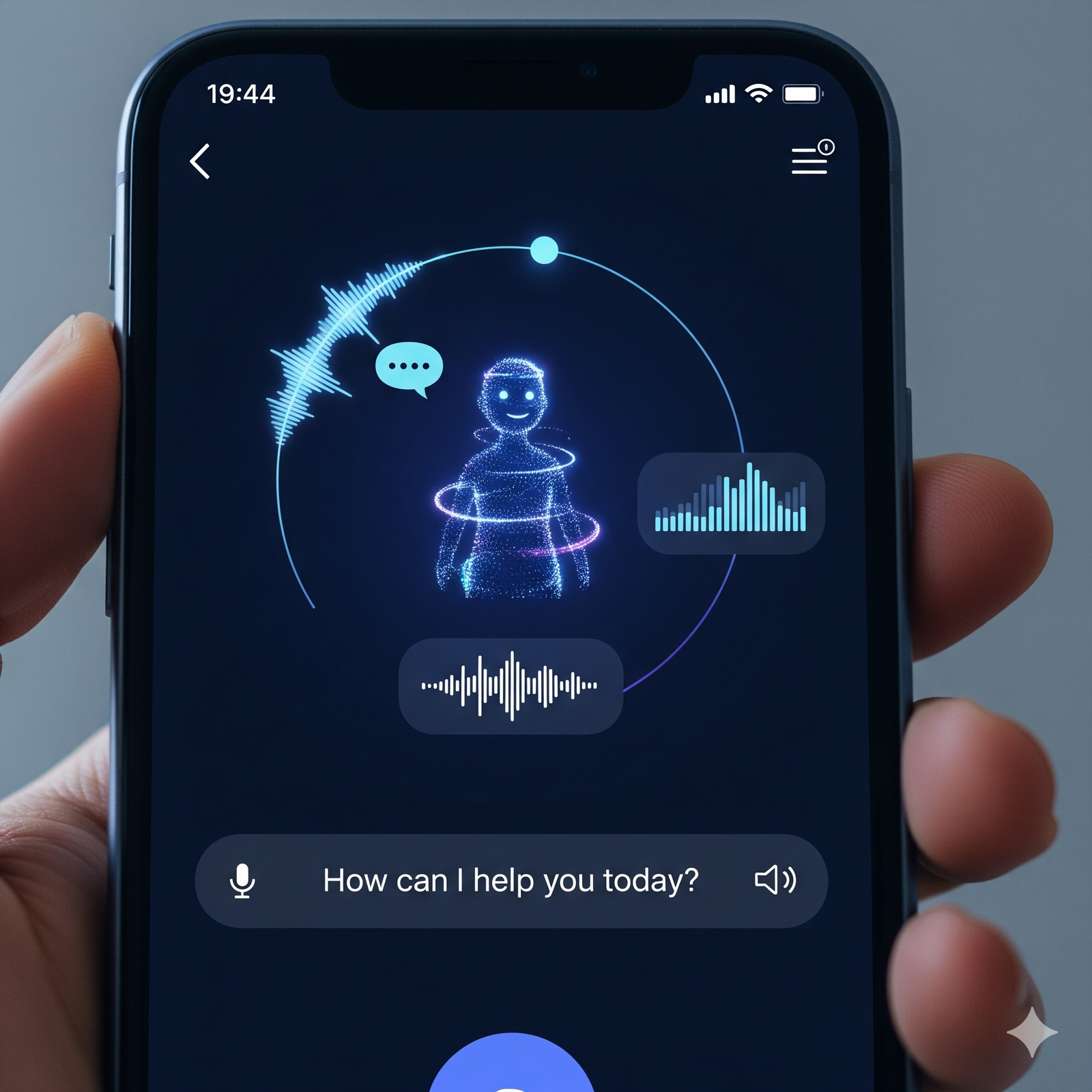
Offered by Creator: SpeakLens is a revolutionary mobile application developed to provide users with an intuitive and immersive AI companion experience. By seamlessly integrating advanced audio and visual processing with a state-of-the-art AI model, SpeakLens enables natural conversations and real-time understanding of the user’s surroundings.

Leave a Reply