
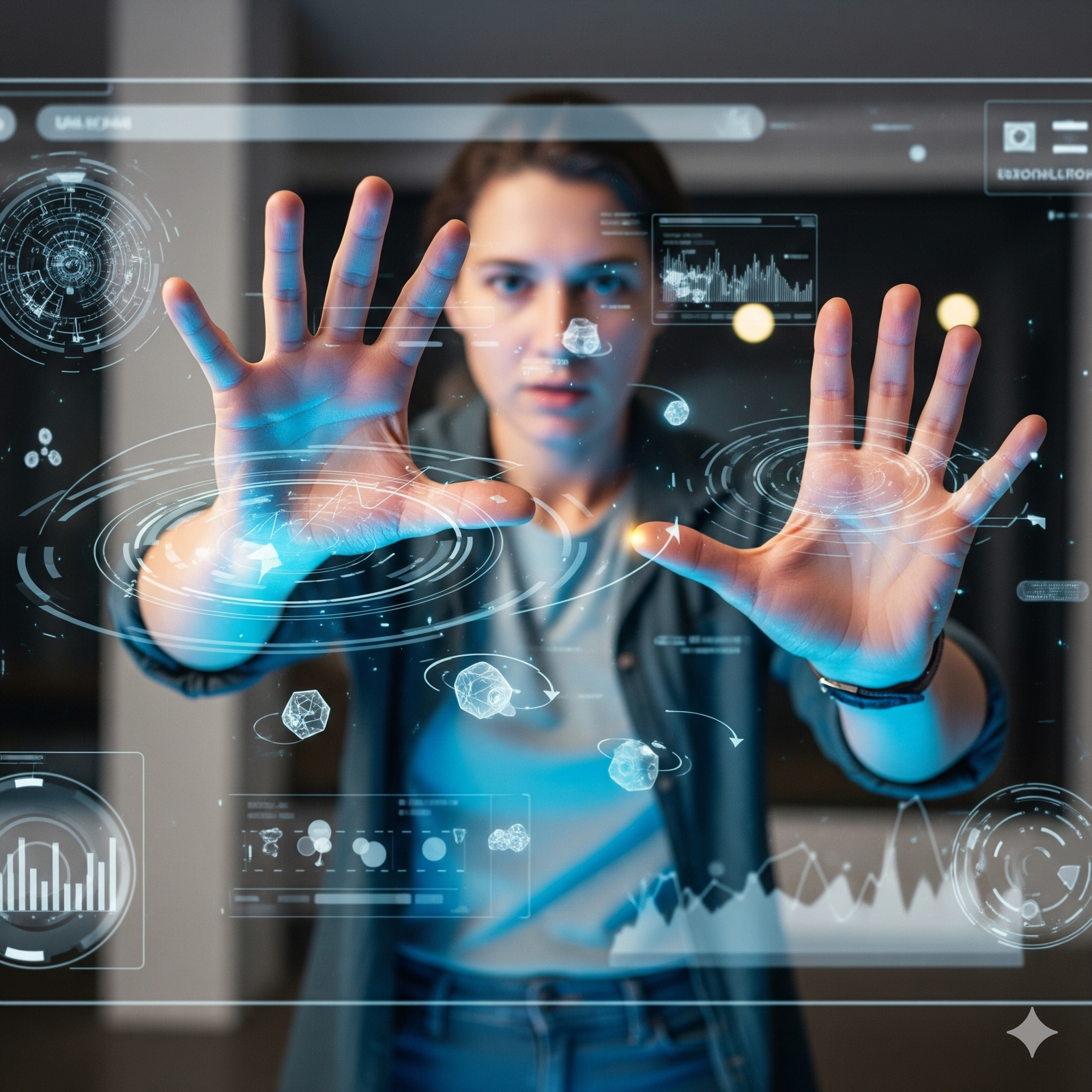
Based on recent web research, here are some key developments in computer vision advancements for mobile devices:
Advancements:
- AI-Optimized Chips: Companies like Arm are releasing new chip lineups optimized for AI workloads on mobile devices. The new Arm Lumex Compute Subsystem (CSS) platform is designed to accelerate on-device artificial intelligence for smartphones and other consumer electronics. The platform includes a new C1 CPU cluster and Mali G1-Ultra GPU. The C1 cores, with SME2 instruction set, can provide up to a five-fold increase in AI performance. The Mali G1-Ultra GPU delivers improved graphics and AI inference performance with a two-fold increase in ray tracing performance.
- Real-time, On-device Processing: Computer vision tasks are increasingly being performed directly on mobile devices rather than relying on cloud processing. This “edge computing” approach reduces latency, improves privacy and security, and enables real-time analysis of images and videos. Advancements in sensor integration and machine learning frameworks optimized for mobile hardware are also contributing to this trend.
- Enhanced AI performance: Arm’s new CPU cores are designed to work with a new GPU series. A company could build a smartphone processor that includes one C1-Ultra and several C1-Pro cores. Demanding apps can run on the C-1 Ultra while other workloads may be sent to the other cores to save energy.
- Applications: Computer vision is enhancing smartphone functionality in several ways:
- Face recognition: Used for unlocking devices.
- Augmented reality (AR) filters: integrated into social media apps.
- Text recognition (OCR): Allowing smartphones to read and interpret text in images.
- Photo organization: Sorting photos by recognizing faces.
- Expanding Mobile App Capabilities: Computer vision is set to expand mobile app capabilities in real-time collaboration tools, enhanced healthcare diagnostics, and context-aware security systems.
- Object Tracking: Motion information from the smartphone, such as gyroscope, accelerometer, GPS, and optical flow, helps with object tracking when the camera is moving.
- Generative AI: Generative AI is being used to create synthetic data for training computer vision models, which can minimize privacy risks and make the model training process less expensive and time-consuming.
Commentary:
The advancements in computer vision for mobile devices are paving the way for more intelligent and intuitive mobile experiences. The shift towards on-device processing is particularly significant, as it addresses concerns around latency, privacy, and connectivity. The development of specialized AI-optimized chips will further accelerate this trend, enabling more complex computer vision tasks to be performed efficiently on mobile devices. These developments have implications for various industries, including healthcare, security, manufacturing, and automotive. As mobile devices become more capable of understanding and interpreting the world around them, we can expect to see a new wave of innovative applications and services that leverage the power of computer vision. It’s also worth noting that while the focus is on improving AI and computer vision capabilities on smartphones, some anticipate a future where AI-powered devices could potentially replace smartphones altogether.
Disclaimer: above content was searched, summarized, synthesized and commented by AI, which might make mistakes.
Offered by Creator: Telegesture lets you control your phone or other compatible devices from a distance through hand gestures leveraging advanced computer vision and machine learning techniques analyzing the device’s camera data in real time. It feels especially awesome when you project your device screen to a TV or projector, as if you are controlling the TV or projector from afar through Telekinesis power!

Leave a Reply