
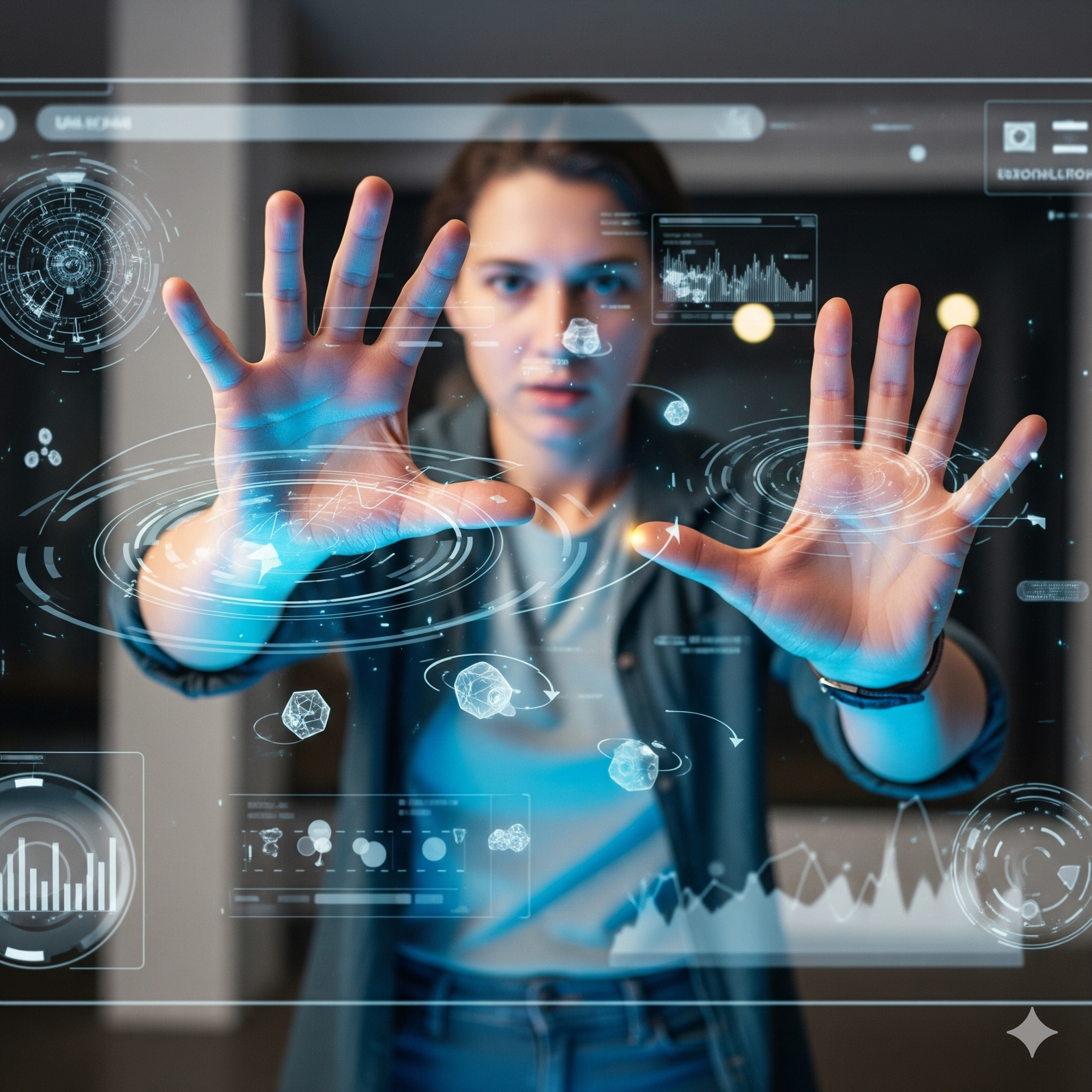
Based on my research, here are some recent and significant developments in the applications of gesture control in remote presentations and collaboration:
Recent Developments:
- Gesture Control Cameras for Video Conferencing: These cameras are designed to increase productivity and engagement during video conferences. They allow users to control the camera with hand gestures, making it easier to focus on different participants or presenters. This technology offers a more interactive and immersive experience.
- Gesture Recognition in Video Conferencing Platforms: Gesture recognition is being integrated into video conferencing platforms to make remote conversations more natural and engaging. This includes features like background blur, virtual backgrounds, and automatic transcription.
- Zoom’s Gesture Recognition Feature: Zoom has rolled out a Gesture Recognition feature that allows users to physically raise their hands or use a thumbs up gesture to notify attendees, triggering the corresponding meeting reaction.
- Gesture Control in Collaborative Workspaces: Gesture control is being implemented in collaborative workspaces to enhance interaction and productivity. Smartboards with gesture control allow multiple people to work simultaneously without blocking the view.
- Hand Gesture Control for Presentations: Systems are being developed that utilize computer vision and AI to recognize hand gestures for controlling presentations. These systems enable users to change slides, zoom in/out, draw, and delete content with hand gestures, eliminating the need for traditional input devices. Speech recognition modules are also being integrated to allow users to navigate to specific slides using voice commands.
- Gesture-Based Remote Control for Digital Signage: Gesture-based remote control is being used in digital signage to allow users to interact with systems through hand gestures. This technology is used in retail stores, museums, and airports to allow customers to browse products or access information without physical touch.
Significant Developments:
- Human-Robot Collaboration: Gesture control technology plays a crucial role in facilitating human-robot collaboration in industrial processes. Workers can communicate with robots through gestures to instruct, reprogram, or adjust robotic actions.
- Gesture Control in Virtual Reality (VR): Gesture control tech lets you do stuff in virtual worlds like you’re really there. You can grab things, doodle in the air, or do fancy moves to make things happen.
- Google’s Project Soli: The FCC approved Google’s Project Soli, a sensing technology that uses miniature radar to detect touchless gestures. This technology aims to transform an individual’s hand into a universal remote control.
- Remote Collaboration on Physical Tasks: Gesture recognition algorithms are being developed to support remote collaboration on physical tasks using tablet PCs. These systems integrate gesture and live video to allow remote collaborators to use both speech and gesture.
- Sharing Hand Gestures for Remote Collaboration: Techniques are being evaluated to share hand gestures for remote collaboration using top-down projection in a virtual environment. These techniques allow sharing dependent or independent hand gestures to improve communication between collaborators.
Commentary:
Gesture control technology is rapidly evolving and finding diverse applications in remote presentations and collaboration. The increasing integration of AI and computer vision is making gesture recognition more accurate and intuitive. While challenges remain, such as technical difficulties in gesture recognition and the cost of implementation, the potential benefits of gesture control, including increased productivity, enhanced engagement, and improved accessibility, are driving its adoption in various industries. As the technology matures, we can expect to see even more innovative applications of gesture control in the future, transforming the way we interact with technology and each other in remote settings.
Disclaimer: above content was searched, summarized, synthesized and commented by AI, which might make mistakes.
Offered by Creator: Telegesture lets you control your phone or other compatible devices from a distance through hand gestures leveraging advanced computer vision and machine learning techniques analyzing the device’s camera data in real time. It feels especially awesome when you project your device screen to a TV or projector, as if you are controlling the TV or projector from afar through Telekinesis power!

Leave a Reply